In partnership with our friends at The CRY HAVOC Company, we are thrilled to announce that we've chosen our cohort of four playwrights for the inaugural cycle of our development series, Brave New Work. The series invites playwrights to create original works that will draw inspiration from Shakespeare's canon, but evolve into something wholly their own.
Meet the Playwrights
TERESA MILLER
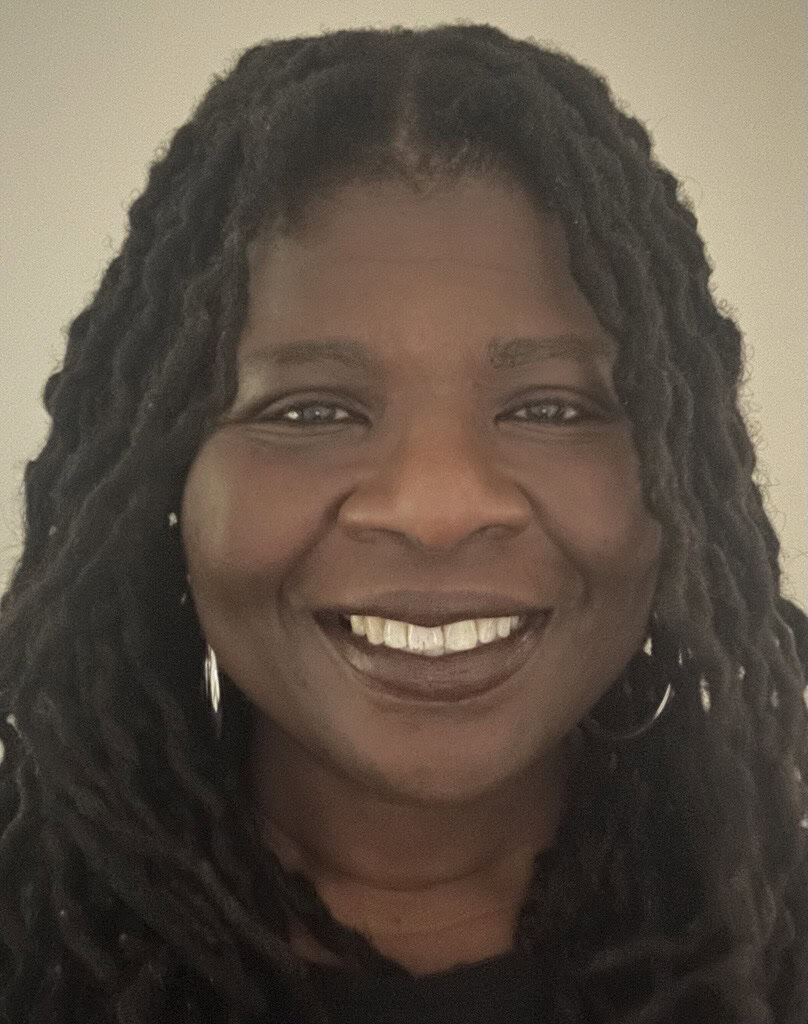 Teresa Miller is a Philadelphia-based playwright and multidisciplinary theatre artist whose work bridges history, community, and imagination. She writes character-driven plays exploring memory, race, labor, and legacy, including Ephraim Slaughter: Freedom’s Witness and Last Night in Jerusalem. Her plays have been developed with theatre companies and museums, and she was selected as one of four writers for the Cry Havoc Company’s Brave New Work: Shakespeare as Prologue inaugural cohort in collaboration with the New York Shakespeare Exchange, an experience she is deeply honored and excited to be part of. Across her work, she centers storytelling as a tool for connection, dignity, and cultural preservation.
Which of Shakespeare's plays have you chosen as the springboard for your play? What intrigues or excites you about building on that foundation?
What has always intrigued me about Hamlet is that it ends with almost everyone dead, but the emotional and political consequences of those deaths are largely left unexplored. We leave the play with Horatio as the sole surviving witness, charged with telling the story. That moment felt like an opening rather than a closing. My play After Denmark begins in that silence. I’m interested in what happens when the spectacle of tragedy has ended and only the witnesses remain. What does it mean to carry the memory of a kingdom that has collapsed? How does someone explain those events to people who were never there?
Which NYC neighborhoods make you feel the most at home?
Although I am not a New Yorker, I’ve always felt at home in Harlem. There's something about Harlem that feels deeply theatrical. From the layering of history, music, street life, and memory. It’s a place where past and present feel like they’re standing beside each other on the same block. As a playwright who is interested in memory, lineage, and the way stories live inside communities, Harlem has always felt like a neighborhood where storytelling is embedded in the architecture The streets carry the echoes of writers, musicians, organizers, and ordinary people whose lives were anything but ordinary.
What types of prompts or source material are you most drawn to as a playwright? How would you describe your artistic voice or point-of-view?
I’m drawn to history, memory, and the spaces where personal lives intersect with larger historical forces. Many of my plays begin with a question about what has been forgotten or overlooked. I’m interested in the people who stand at the edges of historical narratives and those are the witnesses, the survivors, the ones tasked with carrying the story forward. Sometimes the starting point is archival research. Sometimes it’s a fragment of history that refuses to let go. Sometimes it’s a literary text that contains a silence I want to explore. I’m particularly interested in the tension between documented history and lived experience and how theater can hold both at the same time. My artistic point of view often sits at the intersection of history, memory, and the surreal. I ’m interested in plays that move between the visible world, the invisible one and between what can be documented and what can only be felt. Many of my plays include elements of magical realism or heightened theatricality because memory itself rarely moves in a straight line. I’m also deeply interested in witnessing. And that is who bears witness to events? Who gets to narrate them and what responsibility comes with that act. Whether I’m writing about a historical figure, a community, or a fictional character, my goal is to create work that invites audiences to step into a moment where past and present are in conversation with each other.